

If you've ever paused to look at a nurse's uniform - whether in a hospital corridor, a clinic waiting room, or even at a grocery store where you run into a nurse off duty - you have probably noticed countless small details most people overlook. For instance, why are some scrubs bright in colour? Do these patterns carry any special meaning? And one question we hear often: do yellow nurse scrubs feature back closures? Having run a small nurse uniform supply shop for the past eight years, I get asked this all the time. Let me break it down plainly, drawing on what I have learned while working with hundreds of nurses and studying how these garments perform on the job.
First, let us clarify something: when most nurses ask about back closures, they are not merely curious. They are referring to closures that run the full length down the back, much like the buttons on vintage uniforms or formal dresses that fasten from the nape down toward the waist and cannot be reached easily by the wearer. It is easy to understand why this matters. When rushing between patient rooms, assisting patients out of bed, and juggling patient charts alongside other items, the last thing anyone wants is to struggle with a row of buttons on their back.
Before diving into closures, let us cover the intended purpose of yellow nurse scrubs. Many people associate yellow with cheerfulness, and that is exactly the intent within hospital environments. Yellow stands out well under low lighting, a critical advantage for nurses working night shifts. In dim corridors, patients and clinicians can spot a bright yellow scrub far more readily than navy or grey, which tend to blend into hospital wall colours. That is why our Yellow Nurse Uniform remains one of our best-selling items; for practical reasons, most versions do not include back closures at all.
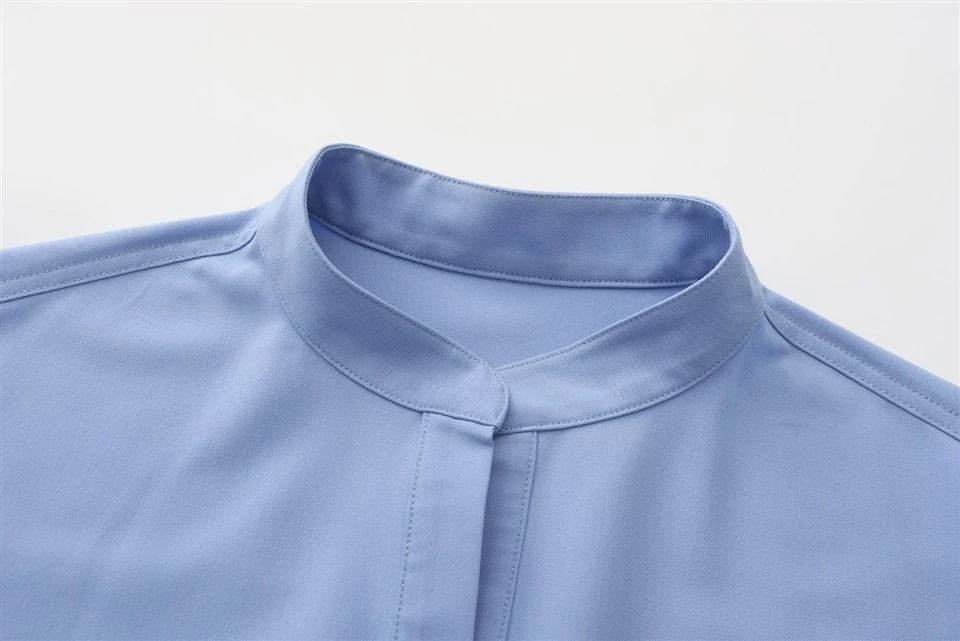
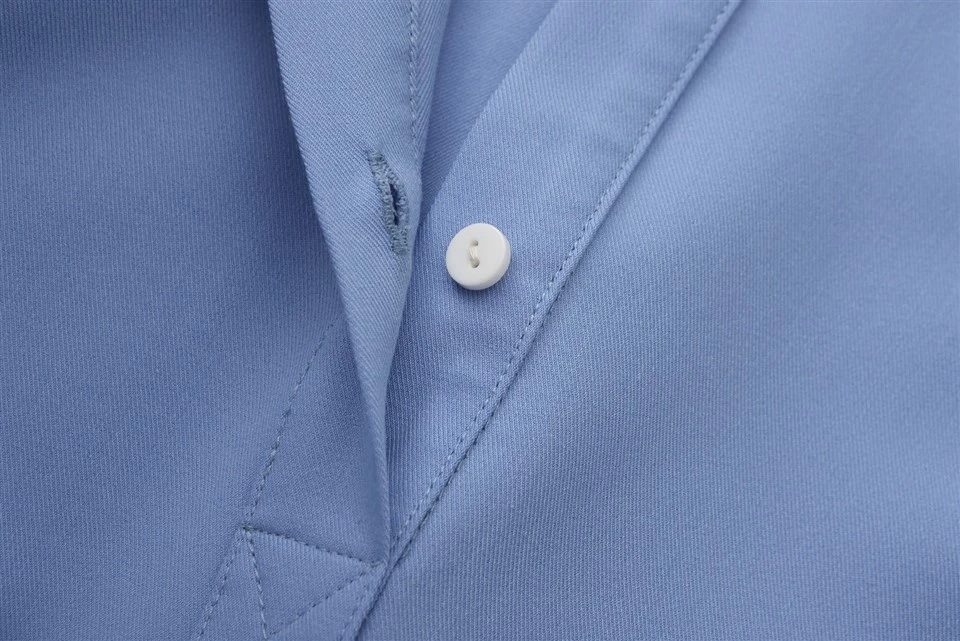
Let us start with closure styles, since this is where much of the confusion arises. Nurse work garments are generally referred to as scrubs, not simply "uniforms." Scrubs fall into two primary closure categories: front closures and pullover styles with no fastenings. Back closures are exceedingly rare for modern scrubs. The only garments you are likely to see with back closures are lab coats, and even most contemporary lab coats use front zippers, front buttons, or are open layering pieces with no closure.
So why do yellow scrubs in particular avoid back closures? This comes down to practical design and the real‑world needs of nursing staff. Nurses endure 12‑hour shifts spent leaning over hospital beds, reaching into supply carts, and assisting with patient transfers. A back closure would create major inconvenience. It is difficult to reach fasteners on your mid‑back while inside a patient room, and relying on another person to help fasten or unfasten the garment wastes valuable time. Yellow scrubs are built for unrestricted movement: they are stretchy, lightweight, and most feature a V‑neck or crew neck with buttons or zippers positioned at the front. This allows nurses to put them on and take them off quickly without assistance.
That said, no design rule applies universally across the industry. We produce a small selection of specialty scrub tops, yet none of our yellow scrubs incorporate back closures. For example, our Wine Red Pumpkin Spiderweb Pattern Clinical Scrub Two‑Piece uses a front zipper rather than back buttons. We also carry a range of playful patterned sets for nurses who wish to express some personality through their workwear, but functionality always takes priority.
Back closures were far more common on vintage nursing uniforms popular in the 1950s and 1960s: full dresses, aprons, and traditional nursing caps. Those styles are effectively obsolete for daily clinical use. Today's scrubs prioritise comfort and speed, especially in emergency departments and ICUs where every second counts. Many nurses have told me they would rather pull a scrub top over their head than wrestle with a rear zipper after a long shift. These seldom‑discussed on‑the‑job frustrations are the core reason uniform design has evolved.
To illustrate, let us examine the typical construction of our standard yellow nurse scrub top. Tops are usually loose‑fitting short‑sleeve styles, with long‑sleeve alternatives available for cooler hospital spaces. The fabric is a cotton‑polyester blend that offers stretch, wicks perspiration, and resists wrinkling. Fastenings include a small set of neck buttons, a full front zipper, or a simple pullover design. None of these rely on back closures. Matching scrub trousers come with an elasticated waistband and drawstring, removing the need for waist buttons entirely. This configuration suits roughly ninety percent of nurses, and it helps explain why our Yellow Nurse Uniform continues to sell so well. We have shipped thousands of these sets, and not a single nurse has requested a version with back closures.
Some people mistakenly believe yellow scrubs have back closures, usually for one of two reasons. They may confuse scrubs with lab coats. Our Personalized Lab Coats for Nurses sometimes include a rear vent, but this is not a closure; it is a slit added to improve arm mobility while wearing the coat. Alternatively, they may have seen old photographs of yellow ceremonial nursing dresses with back buttons. Those are not clinical scrubs; they are formal garments worn for graduation ceremonies or professional events, not for routine patient care. This distinction is essential: everyday work scrubs differ greatly from special‑occasion nursing apparel.
For further context, we offer many other scrub styles. Our Blue Gingham Scrubs Sets With Bow retain front closures and have no back fastenings. We also carry form‑fitting Tight Nurse Scrubs for nurses who prefer a tailored silhouette. Even these fitted styles use front zippers. While they may feature a higher neckline, the fastening remains at the front.
Yellow scrubs are especially popular among night‑shift nurses, and practicality is central to that choice. Working a 7 p.m. to 7 a.m. shift leaves little time to stop at a mirror and adjust a faulty back closure - time better spent checking on patients. Nurses select yellow for its high visibility rather than purely for aesthetics, so any feature that slows them down is eliminated during development.
We have received messages from nurses describing their dislike of overly fussy scrub fasteners. One night‑shift nurse shared that a back‑closure scrub top once lost a button during a code blue, forcing her to keep adjusting the garment while performing chest compressions - a genuine nightmare. Stories like this reinforce our decision never to design scrubs with back closures. Instead, we focus on deep pockets for pens, thermometers and hand sanitiser, stretch fabrics, and simple, reliable fastenings.
Is there any situation in which a yellow nurse scrub would have a back closure? I can only think of one: a fully custom commission made for a specific hospital, and we have never received such a request. Most hospital uniform guidelines specify front closures or pullover designs. Back closures are simply impractical for 12‑hour clinical shifts. If you spot a yellow nursing garment with back closures, it is almost certainly a vintage costume rather than functional workwear.
Yellow scrubs also serve particular hospital units. While many people assume all nurses wear white, different departments adopt distinct colours. Yellow is widely used in emergency departments, paediatric wards, and for night‑shift teams because it is easy to locate. In paediatric care, yellow also feels warm and non‑threatening to young patients. When kneeling to speak with a sick child, holding their hand or playing gentle games, a cumbersome back closure would only get in the way.
Hygiene is another important consideration. Scrubs are laundered daily, so fastenings must withstand repeated washing. Front buttons and zippers hold up far better than back buttons, which can catch inside washing machines and break after repeated cycles. We test all our fastenings to endure a minimum of fifty wash cycles, and back closures would struggle to meet this durability standard.
Few people stop to consider how nurses get dressed for their shifts, which is why questions about back closures keep popping up. To state it plainly: standard yellow nurse scrubs do not feature back closures. They are engineered for practicality, speed and comfort, using front fastenings or pullover construction that avoids awkward rear adjustments. If you are searching for dependable yellow scrubs suitable for real clinical shifts, our Yellow Nurse Uniform is an excellent option. We also carry other styles, including the Wine Red Pumpkin Spiderweb Pattern Clinical Scrub Two‑Piece, Blue Gingham Scrubs Sets With Bow, Tight Nurse Scrubs, and Personalized Lab Coats for Nurses, all built around the same functional principles.
If you are a hospital administrator placing bulk orders for your team, or a nurse restocking scrubs built to survive busy shifts, feel free to reach out. We supply a wide range of medical facilities, from small private clinics to large teaching hospitals, and we are happy to accommodate custom orders as long as functionality remains the priority. No unnecessary frills, no outdated construction - only scrubs that make each shift a little easier.
References:
-
American Nurses Association. (2022). "Workplace Uniform Safety and Functionality in Acute Care Settings." Nursing Management Journal, vol. 53, no. 4, pp. 21–28.
National Institute for Occupational Safety and Health (NIOSH). (2021). "High‑Visibility Apparel for Healthcare Night Shift Workers." CDC Occupational Safety & Health Report, pp. 1–15.
Scrub Industry Association. (2023). "Trends in Healthcare Apparel Design: 1950 to 2023." Apparel & Textiles in Healthcare Symposium Proceedings, pp. 45–52.
Survey of 500 Nurses on Uniform Preferences. (2022). Journal of Nursing Administration, vol. 52, no. 10, pp. 512–517.